Blog
Notes from the build
Costs, architectures, and honest trade-offs — written by the team shipping it, for US and European buyers of serious software.
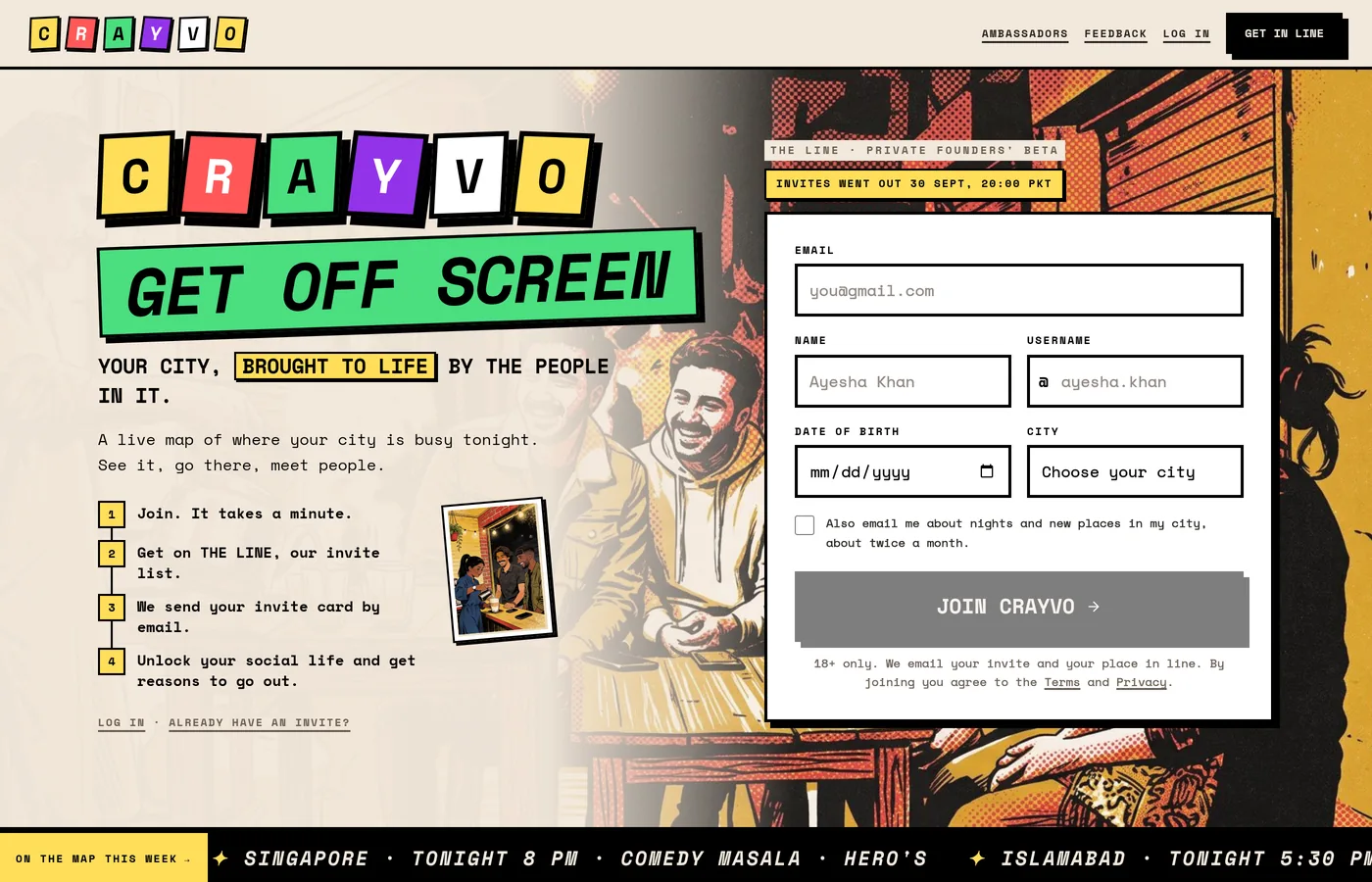
Building CRAYVO, part 5: THE LINE, and why we open a city by invitation
Why CRAYVO opens a city in waves from an invite list instead of a launch: a half-empty room is worse than none. The rules of THE LINE, the points system we removed, the invite codes that worked like cash, and the funnel numbers that showed the leak was ours.
Read articleBuilding CRAYVO, part 4: a thousand pages search engines can trust
ReadBuilding CRAYVO, part 3: a robot with a door, not a key
ReadBuilding CRAYVO, part 2: eleven cities of nights, and the rules that keep them true
ReadBuilding CRAYVO, part 1: the map is not the point
ReadCustom software development cost in 2026: real numbers
ReadHow to choose a custom software development company (US & EU)
ReadShipping AI agents that survive production
ReadWhy most AI agent pilots die before production
ReadEU AI Act for AI agents: a builder's guide to August 2026
ReadRWA tokenization platform cost in 2026: a real breakdown
ReadGENIUS Act vs MiCA: building stablecoin rails in 2026
ReadDesigning a payment rail for tokenized assets
ReadSelf-hosted vs managed RPC nodes: the true cost in 2026
ReadRPC nodes for MiCA and DORA-regulated firms
ReadCut your cloud bill: develop on-prem, deploy to cloud
ReadEU data sovereignty in 2026: beyond GDPR-compliant hosting
ReadWhat onchain regulatory intelligence actually requires
ReadMVP development cost in 2026: what $100K actually buys
ReadTechnical co-founder as a service: the founder's guide
ReadDev agency vs product studio: who should build your software?
ReadWho owns the code? IP and exit clauses in outsourcing
ReadRunning reliable RPC: lessons from Binari Nodes
ReadRather talk
than read?
Every guide here started as a hard problem on a real engagement.